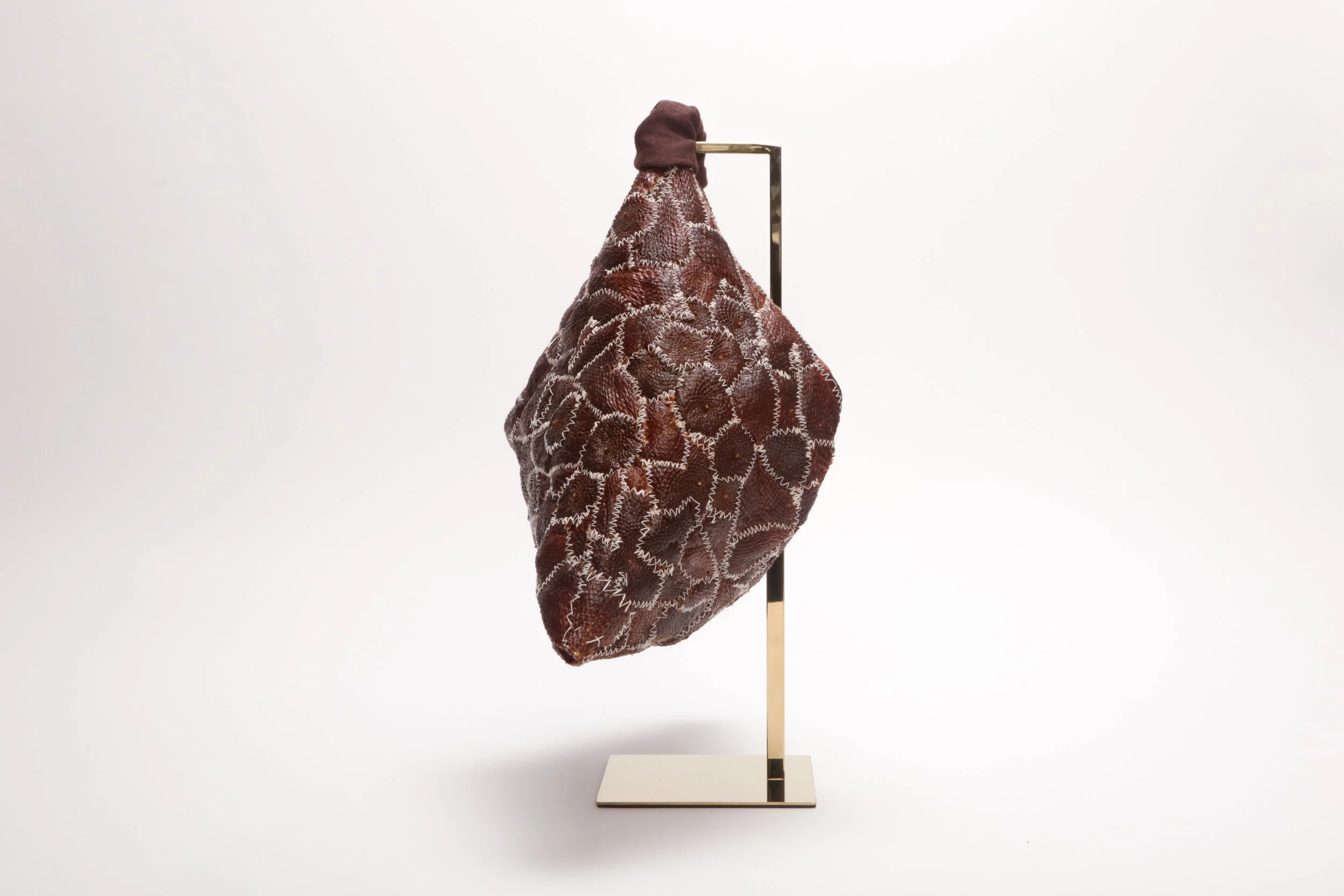
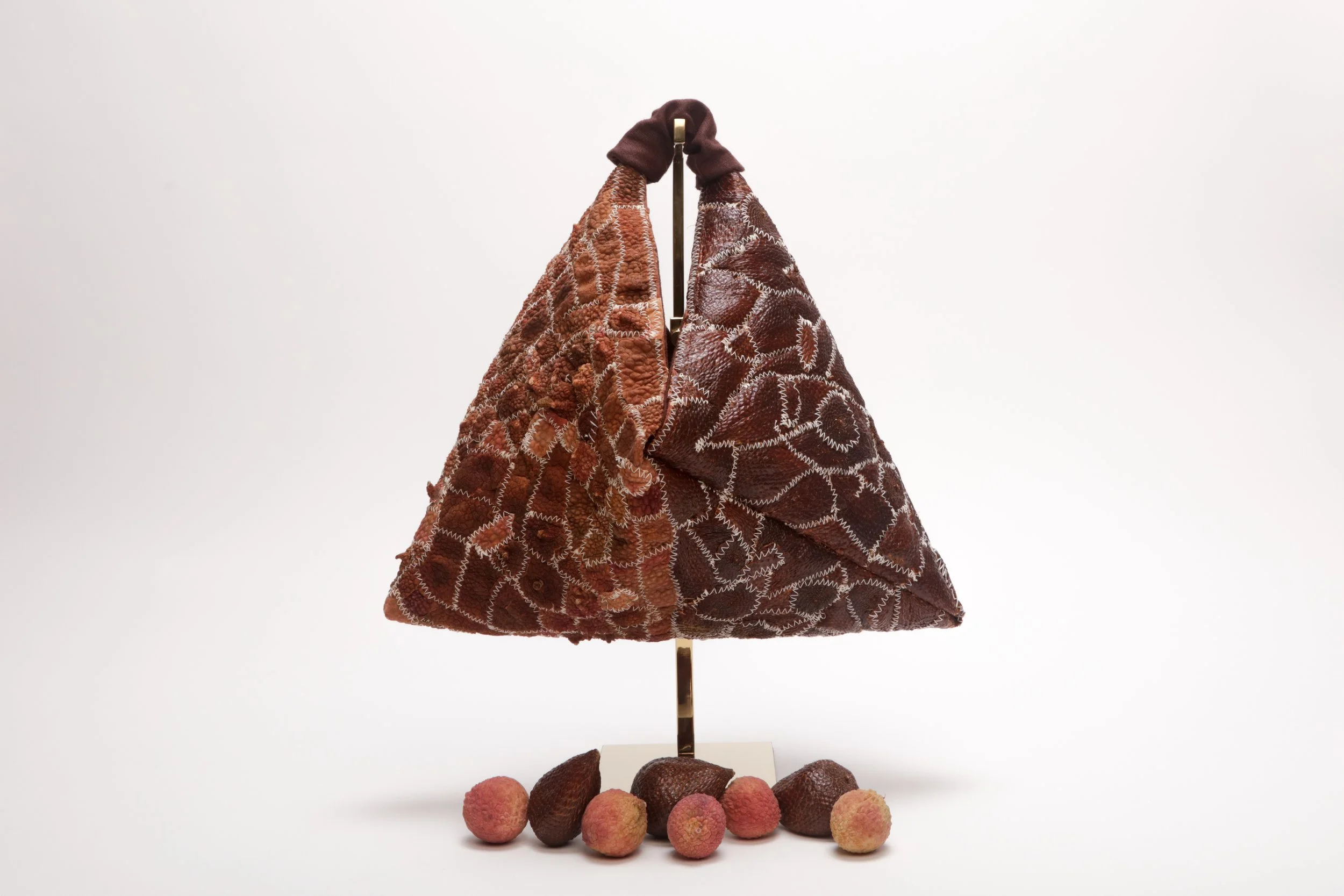
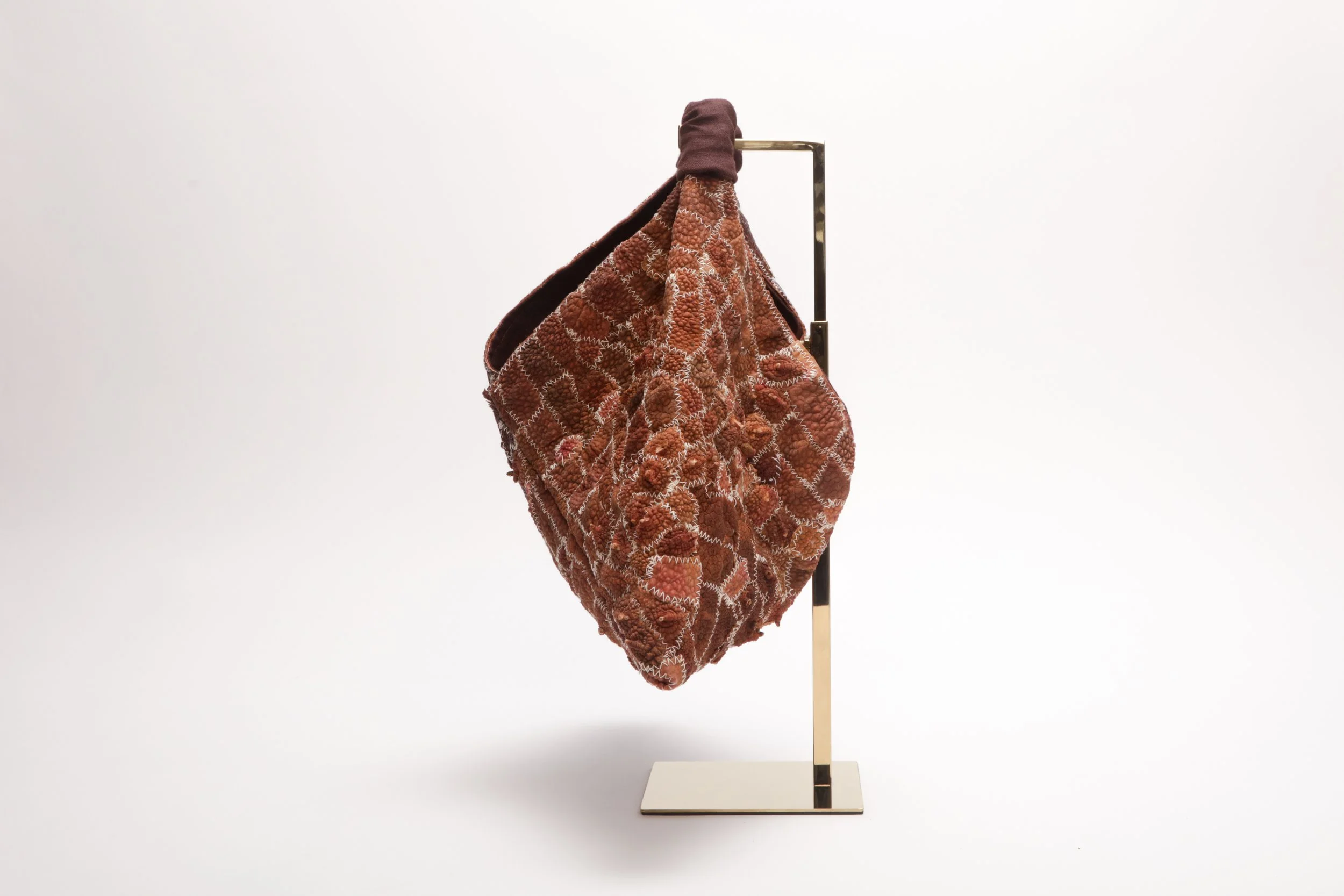
Developed as a continuation of my research into regenerative materials, Karpos investigates fruit waste as a high value, expressive textile. Responding to the environmental cost of both conventional leather and synthetic vegan alternatives, the project reframes discarded fruit skins as something to be celebrated for their natural irregularities, tactility, and sensorial depth.
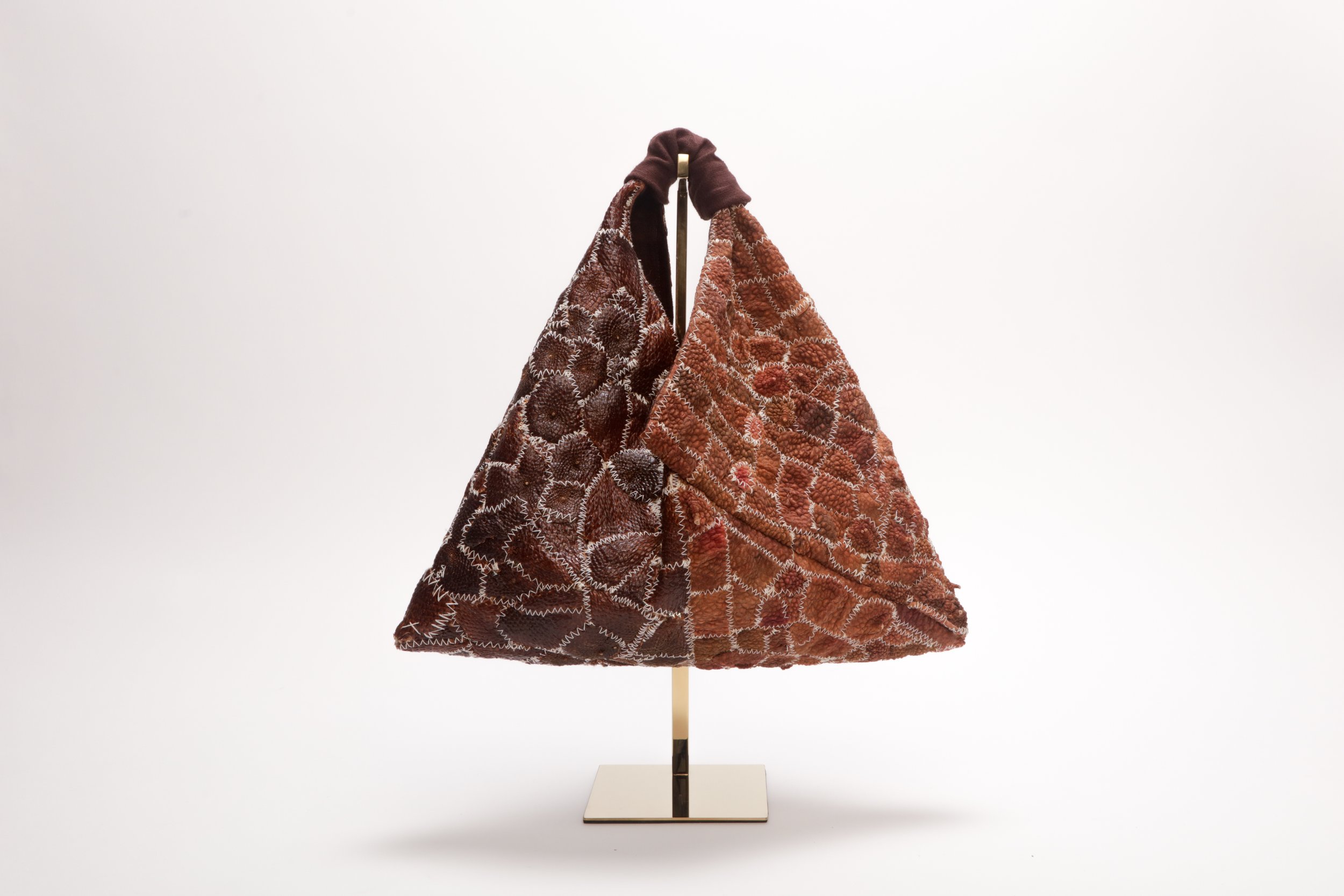
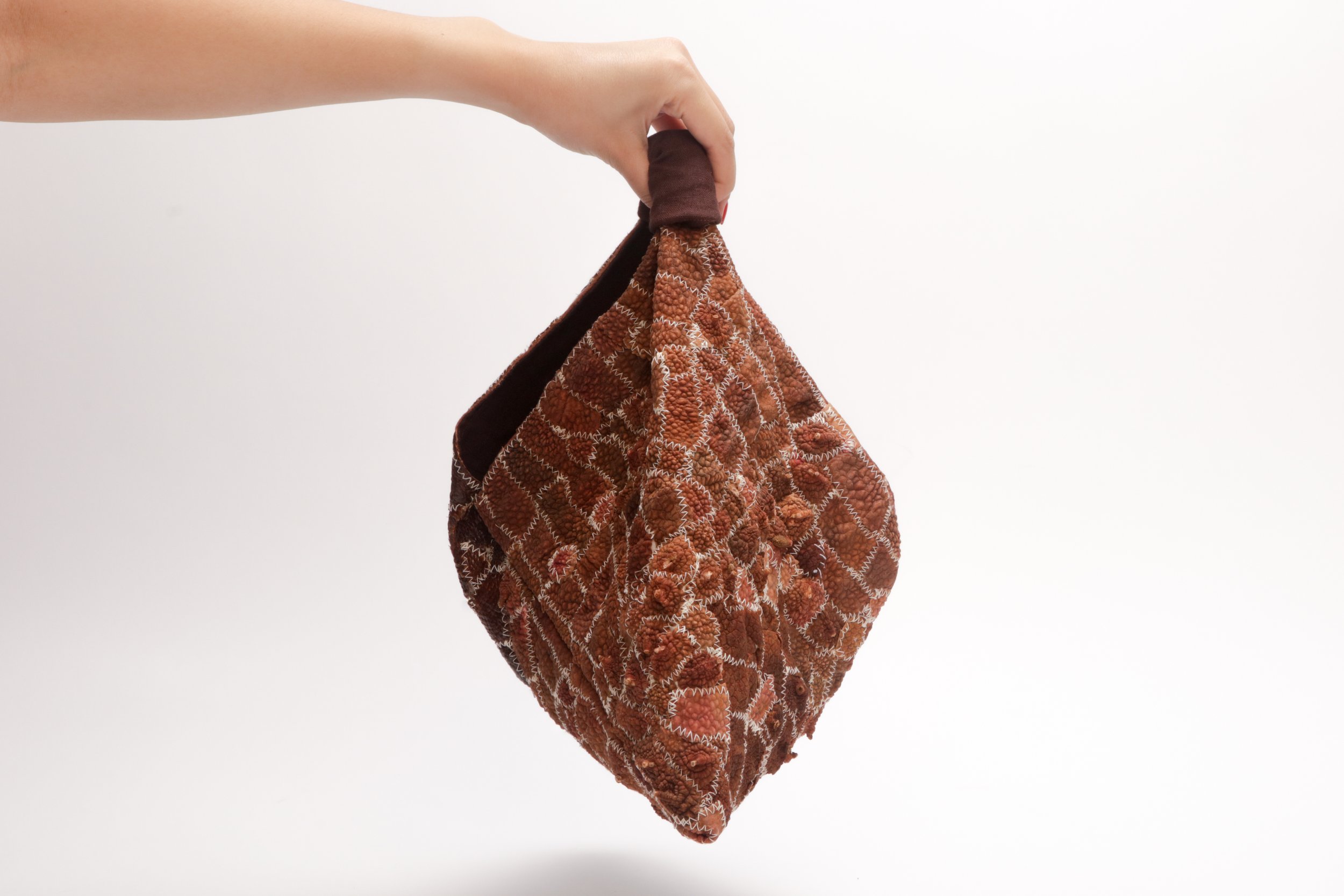
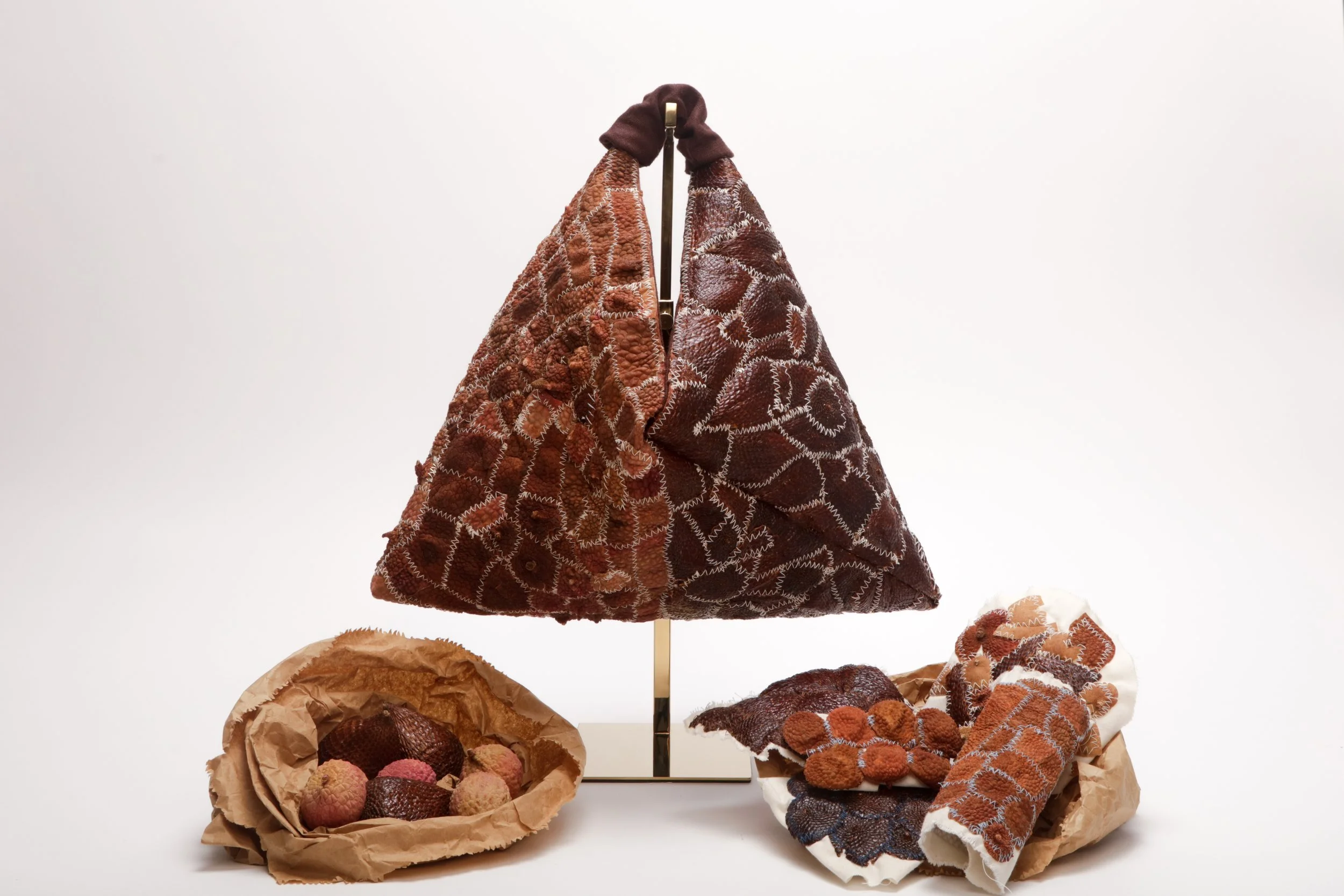
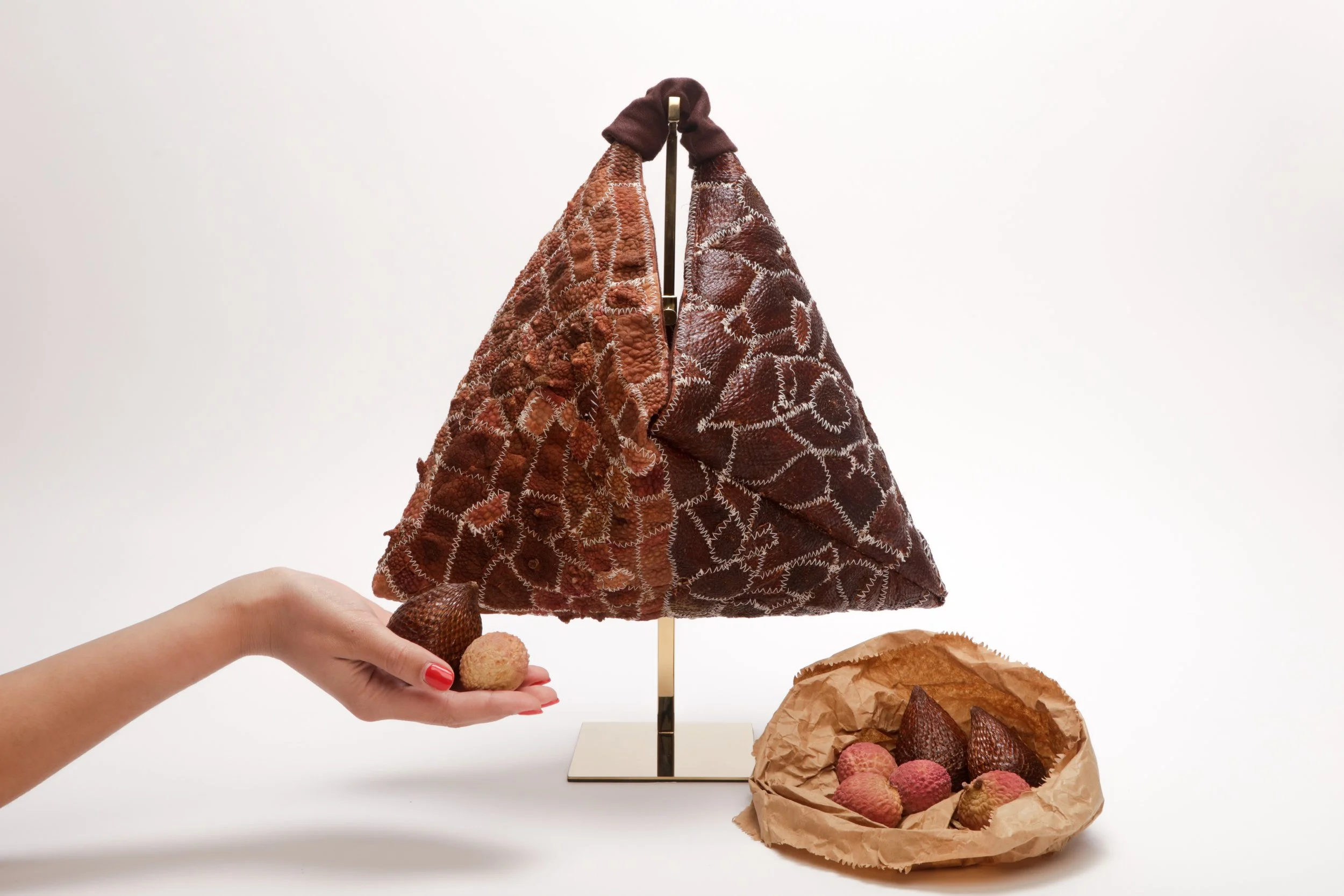
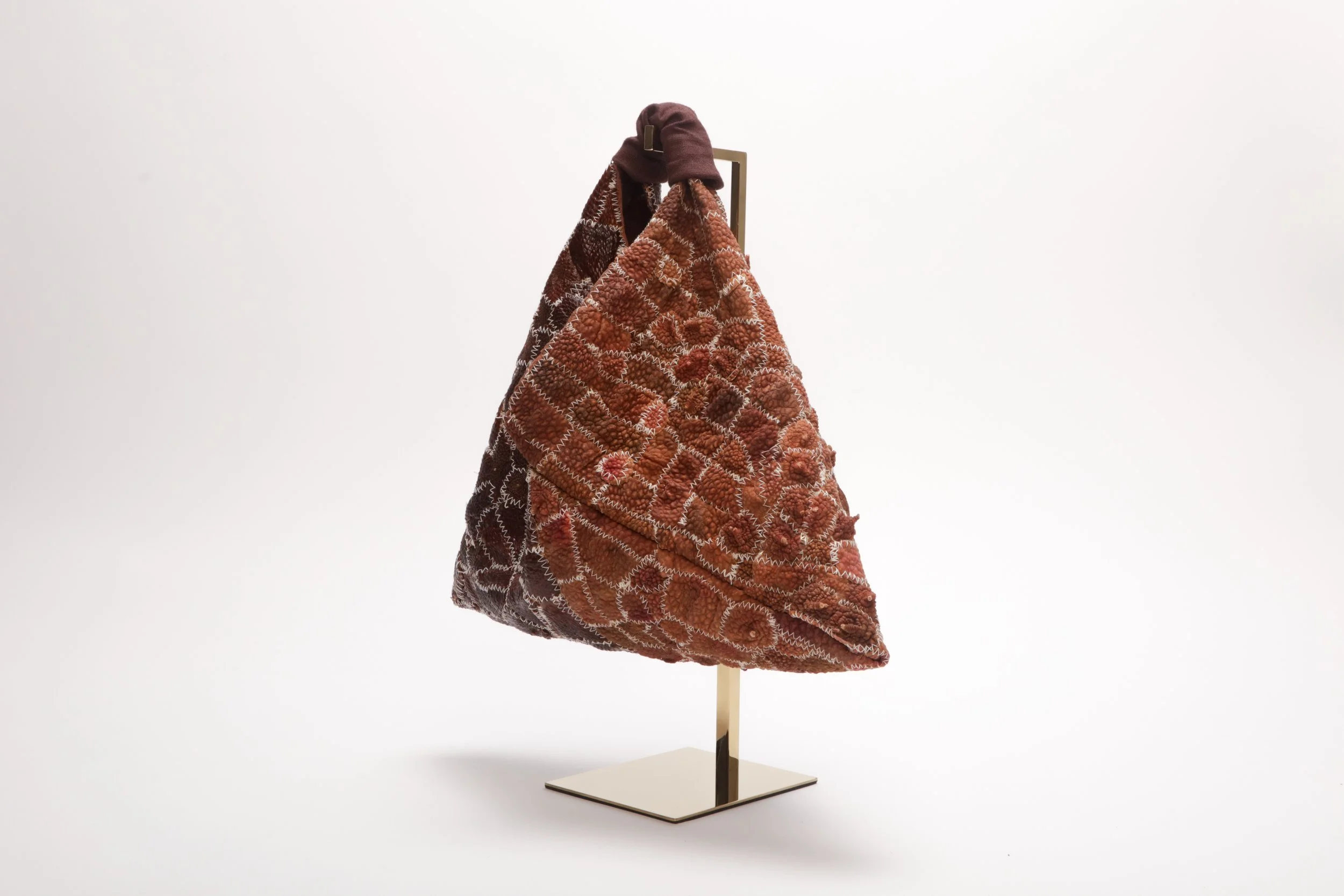
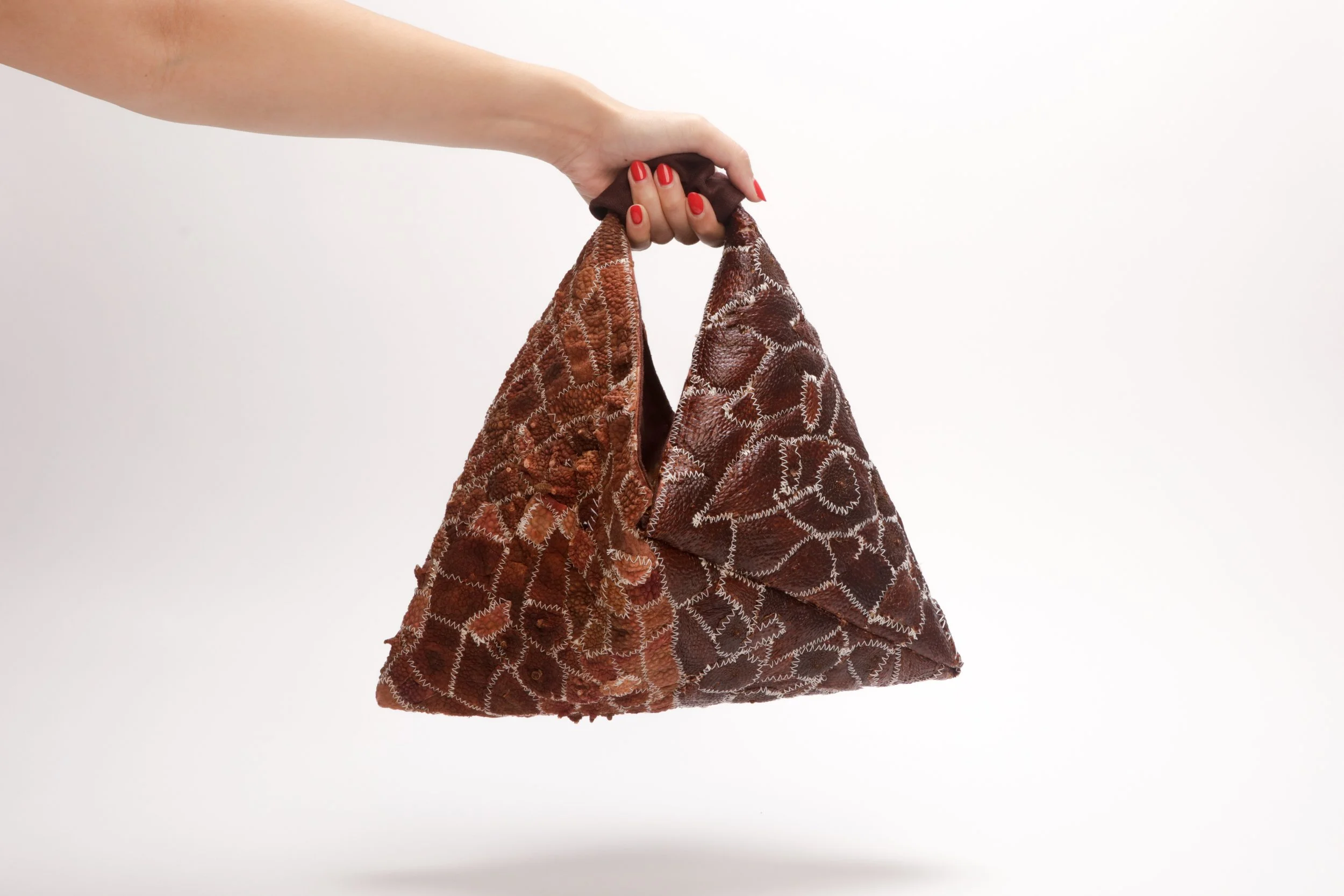
Through material experimentation, Karpos transforms discarded salak and lychee skins into a biodegradable, flexible textile using a low impact process. Rather than imitating leather, the material preserves the fruit’s inherent texture, colour variation, and surface unpredictability, allowing each skin to remain legible in the final form.
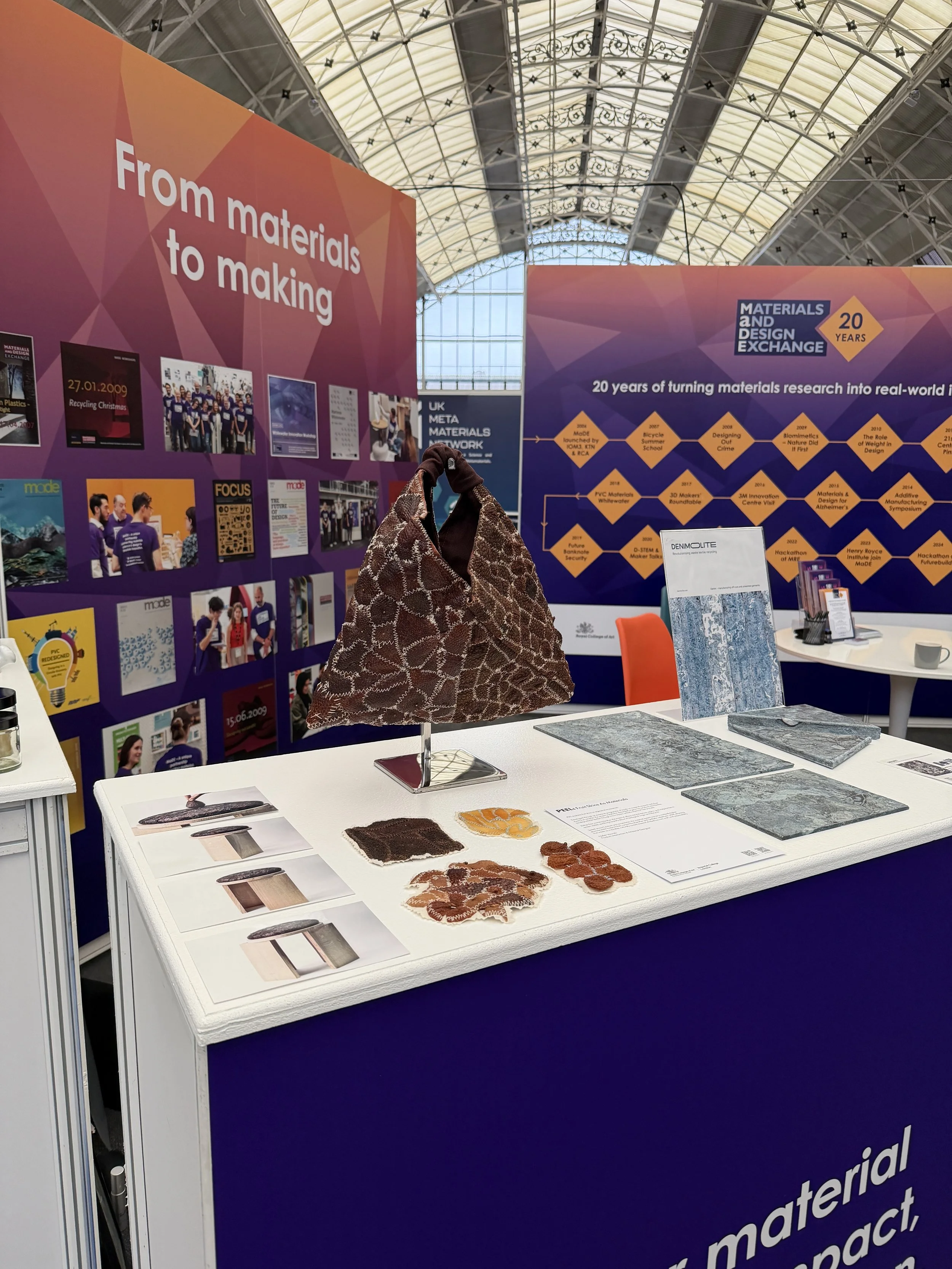
The outcome is a functional, elegant bag designed to foreground the material’s natural strength and character. Made from 40 lychee skins and 20 salak skins, backed with cotton muslin and lined with linen, the piece is entirely biodegradable, with no synthetics or chemical processing. Compared to conventional leather and PU based alternatives, the material’s estimated CO2 emissions are 90 to 95 percent lower.
More than a material innovation, Karpos is an exploration of value, questioning what we discard, what we preserve, and how design can transform waste into something poetic, durable, and culturally meaningful.